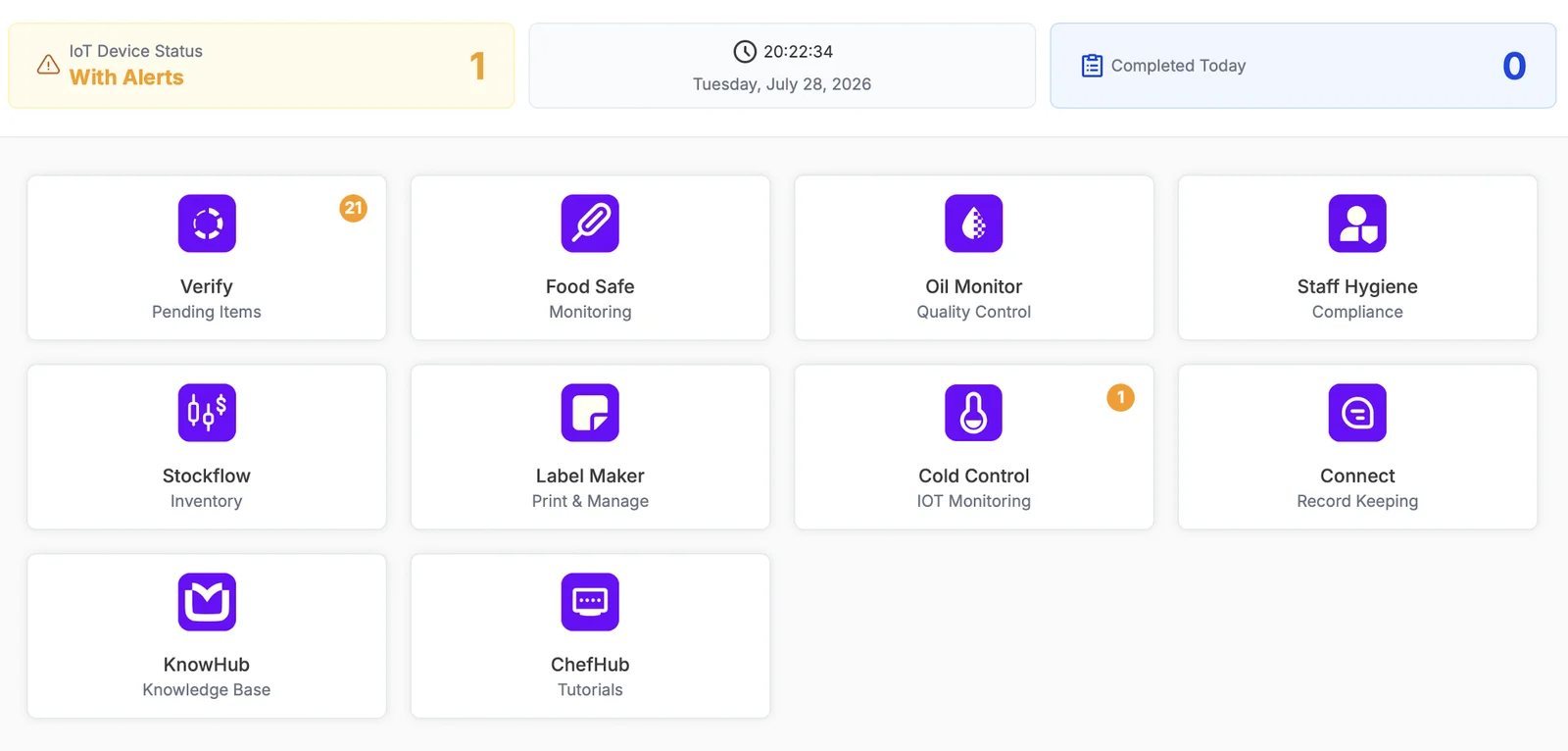
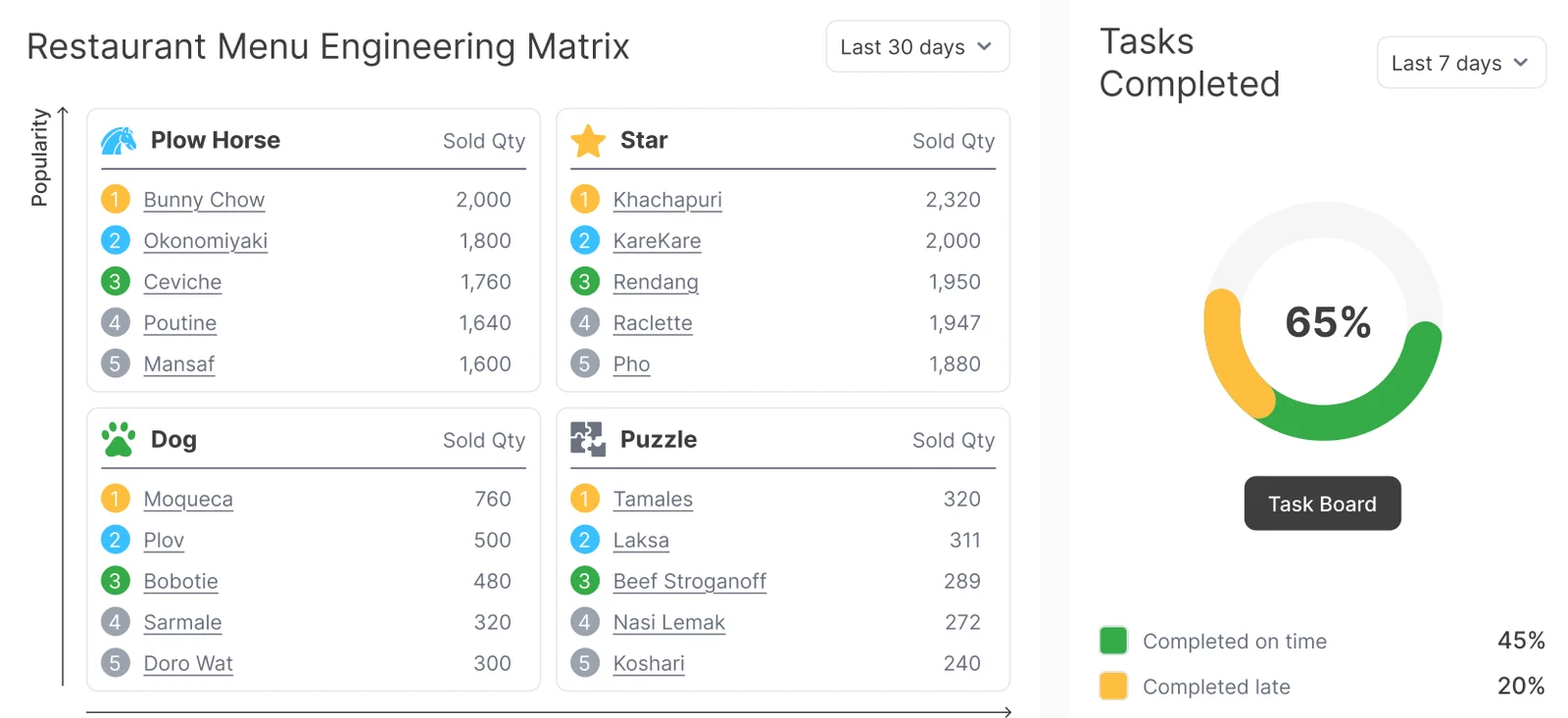
Kitchen, floor, staff, and new concepts — not just recipe costing. Dinic covers costing, food safety, scheduling, and concept development today, with the rest of the operation on the way. Start with one module. Add more when you're ready.
Most restaurant tech is either a spreadsheet held together with hope, or an enterprise platform priced and built for chains you're not. Dinic's modules cover the kitchen, the floor, your team, and your next opening — built individually, so you pay for what you actually run, and each one is deep enough to replace the spreadsheet for good.
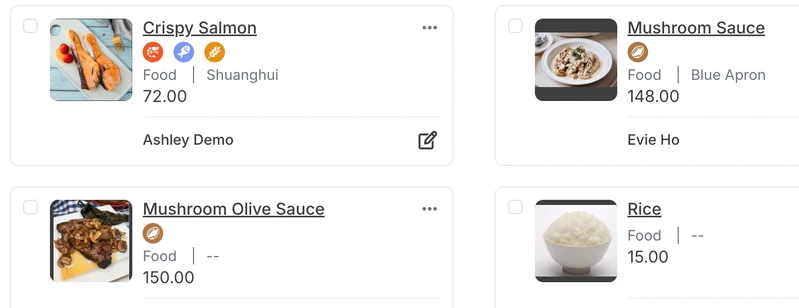
Recipes, costing, and kitchen communication in one system your whole team can access.
HACCP-aligned food safety, without the paperwork.
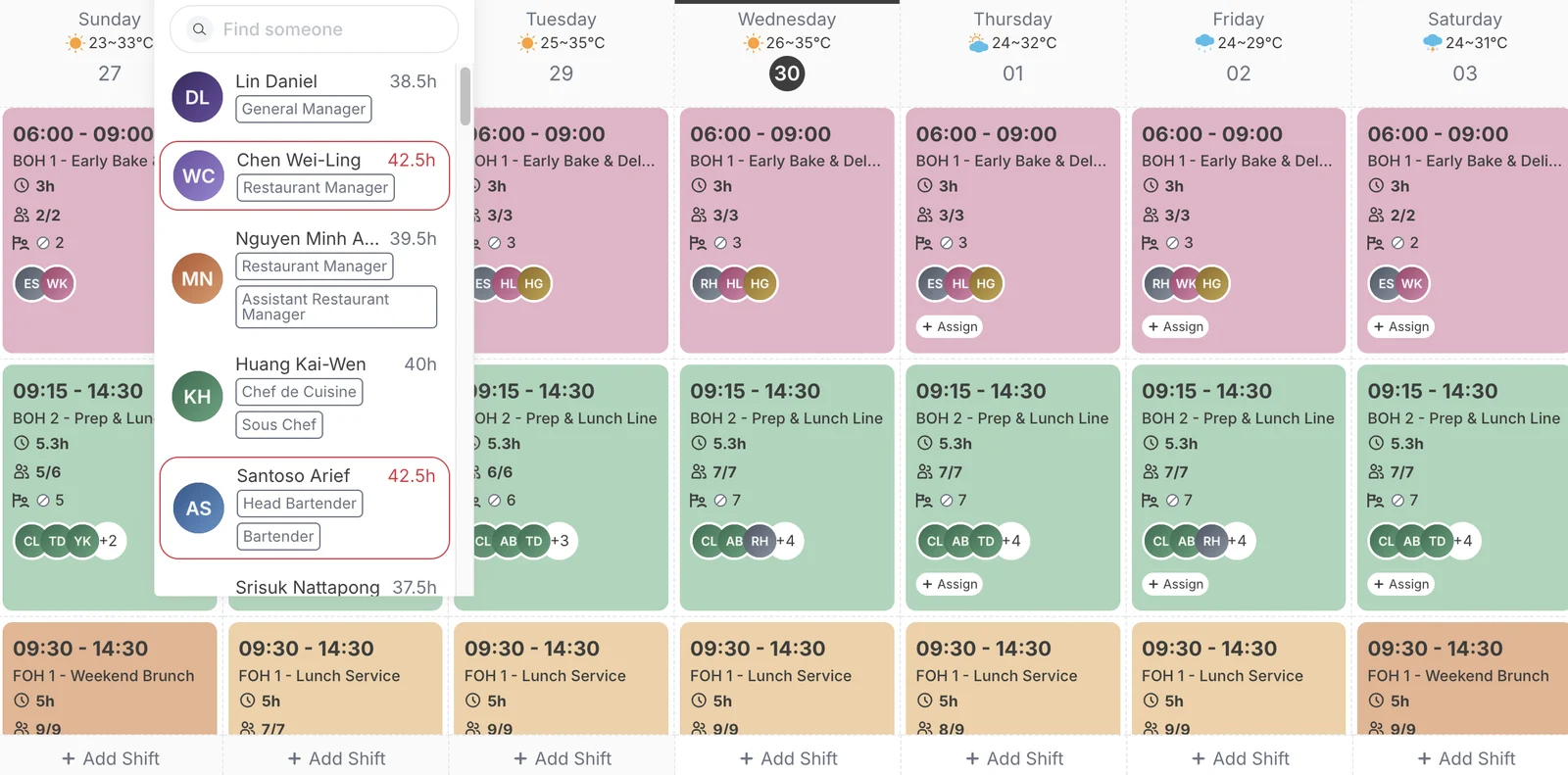
Scheduling and staff wellbeing in one system.
Take a new concept from idea to opening.
The most common starting pair — get your food cost and your compliance under control at the same time, since they're usually breaking for the same reason: nobody has time to track either properly.
Plan the concept with structure instead of a scattered task list, then move straight into recipe costing so your opening menu is priced correctly from day one.
For operators ready to run costing, compliance, and staffing from one place — the closest thing to a full back-of-house system without buying software built for a 40-unit chain.
You don't need to buy an entire restaurant OS to fix your food costing. Start with the module that solves your loudest problem today. Every module stands alone — and connects with the others when you're ready.
Built by F&B operators — not software people guessing at restaurant problems.
Token and pack-based pricing, module by module — with better rates when you combine two or three. Most operators recover the cost in the first week just from time saved. Exact numbers depend on your setup, confirmed on a quick call — no fixed table, no long contract to start.
Talk to us about pricingTell us what's breaking in your kitchen right now, and we'll tell you which module fixes it first.
Book a demo →ChefHub brings recipe costing, yield management, SOPs, and event costing into one system your whole kitchen can access — so pricing decisions are based on real numbers, not last quarter's guess.
Change an ingredient cost once, and ChefHub updates every linked sub-recipe and menu item in real time — no re-entering numbers across a dozen spreadsheets.
Build sub-recipes once — a stock, a sauce, a prep component — and reuse them across every dish that needs them, with yield loss accounted for automatically.
Every recipe carries its method, plating, and station notes alongside its cost — searchable by dish or station, so training and consistency don't depend on one person's memory.
Build event and banquet menus as their own costed entities — quote accurately for private dining and catering without touching your standing menu costs.
Replace the spreadsheet. Know your true food cost per dish without a finance team, and catch margin drift before it eats your month.
Standardize recipes and costing across every location, so a dish costs — and tastes — the same whether it's made in Bangkok or Taipei.
Give students hands-on experience with the same costing tools working kitchens use — recipe costing as a taught skill, not a theory slide.
ChefHub runs on a token/pack model, priced per module with better rates when you combine modules. No fixed table here because the right combination for your operation depends on what you're actually running — but here's what operators like you typically see:
Start with ChefHub alone, or bundle it with the modules solving your other biggest problem right now.
Priced to your real usage on a 20-minute call — not a one-size-fits-all sticker price.
Add modules or locations later. Nothing to renegotiate from scratch, no lock-in to start.
No — ChefHub handles recipe costing, yield, and kitchen SOPs. It's built to sit alongside your existing POS, not replace it.
Yes. We'll walk through your current recipe format on the demo call and map out the fastest way to bring your library over.
You buy a pack of tokens that unlock features and usage as you need them — instead of paying per seat whether or not everyone logs in. Exact token mechanics confirmed on the demo call.
Yes — Growth and Custom plans support multiple locations with shared or location-specific recipe libraries, depending on how your operation runs.
Bring three recipes — we'll cost them live so you can see exactly what ChefHub shows you.
Book a demo →TableSafe replaces the clipboard with digital HACCP checklists, temperature logs, and audit-ready reporting — so compliance is a byproduct of your normal shift, not a scramble before an inspection.
Digital temperature records for fridges, freezers, cooking, and holding — with automated alerts the moment a reading falls outside a safe range, not after the fact.
Standardize opening, closing, and HACCP checklists digitally — every critical control point monitored, logged, and signed off without a binder in sight.
Every log, checklist, and sign-off is stored and instantly searchable — so when an inspector shows up, you're not digging through paper.
Log supplier certifications and delivery temperature checks at the point of receipt — so a bad delivery gets caught before it becomes a bigger problem.
If your team still uses clipboards and binders, TableSafe replaces all of it — digitally signed and instantly searchable.
Stricter compliance standards, more frequent inspections. TableSafe keeps every outlet inspection-ready, every day.
One compliance standard across every kitchen — TableSafe flags when any location drifts, before an inspector does.
TableSafe runs on a token/pack model, priced per module with better rates when you combine modules. No fixed table here because the right combination for your operation depends on what you're actually running — but here's what operators like you typically see:
Start with TableSafe alone, or bundle it with the modules solving your other biggest problem right now.
Priced to your real usage on a 20-minute call — not a one-size-fits-all sticker price.
Add modules or locations later. Nothing to renegotiate from scratch, no lock-in to start.
It digitizes them. We'll map your current HACCP checklists into TableSafe on the demo call, so nothing about your process changes except the paperwork.
The relevant manager gets an instant alert, and the incident is logged automatically with a timestamp — no one has to remember to write it down.
Yes — TableSafe supports shared or location-specific checklists depending on how standardized you want your operation to be.
Every log is stored and searchable indefinitely, so you can pull up any date for an inspection or internal review.
We'll show you exactly what your team stops writing on paper.
Book a demo →Talent handles shift scheduling, attendance, and team pulse checks in one place — with a staff app your team actually uses, so managers stop chasing schedules over WhatsApp.
Build shift schedules in minutes with drag-and-drop assignment, split shifts, and station coverage — built for how restaurants actually staff a shift.
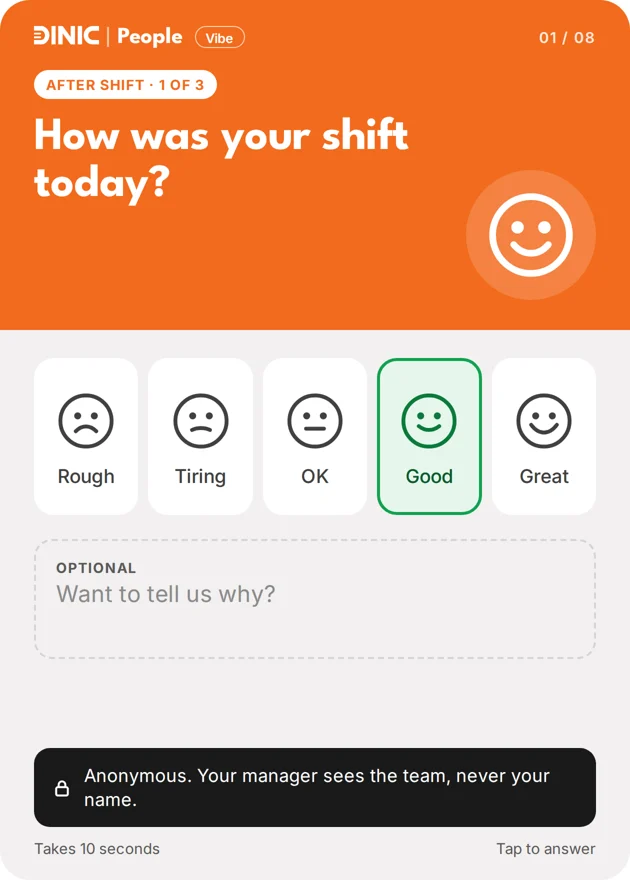
Short daily check-ins your team completes on their own phone — giving managers a live read on energy, stress, and satisfaction across the shift.
Every team member gets their own app to check schedules, request leave, swap shifts, and complete Vibe check-ins — without messaging a manager for basic things.
Structured hiring workflows with checklists and document management, so nothing gets missed between an offer and someone's first shift.
Once you have a team, you need systems. Talent gives you the HR infrastructure without hiring an HR manager.
Standardized hiring and onboarding across every location — new outlet, same process, from day one.
Better hiring, faster onboarding, and an early read on morale reduces turnover significantly.
Talent runs on a token/pack model, priced per module with better rates when you combine modules. No fixed table here because the right combination for your operation depends on what you're actually running — but here's what operators like you typically see:
Start with Talent alone, or bundle it with the modules solving your other biggest problem right now.
Priced to your real usage on a 20-minute call — not a one-size-fits-all sticker price.
Add modules or locations later. Nothing to renegotiate from scratch, no lock-in to start.
Yes, your team installs one lightweight app for schedules, Vibe check-ins, and leave requests — no separate logins for separate tools.
No — managers see aggregate team sentiment, not individual responses. That's what makes people answer honestly.
Yes — schedules, staff records, and Vibe data can be shared or kept location-specific, depending on how your operation runs.
Talent handles scheduling, attendance, and compliance documentation that feeds payroll — it's built to connect to your existing payroll process, not replace it.
We'll show you Flow, Vibe, and the staff app running on your own shift pattern.
Book a demo →ConceptLab gives you the same structured framework a pre-opening consultant charges $5,000–$20,000 for — 976 tasks across every phase of getting a concept from idea to keys in hand.
Concept, Development, Finances, Execution — 976 tasks across 36 categories, sequenced to match the actual timeline of opening a restaurant.
Break-even analysis, revenue projections, and cost structure tools calibrated for F&B — so you know if the concept works before construction starts.
Shared workspaces for consultants, designers, and clients — positioning, identity, and market fit tracked alongside the practical project timeline.
A structured readiness audit in the final weeks before opening — kitchen, front of house, compliance, staff, and systems, all checked before day one.
The structured framework you'd otherwise pay a consultant $5,000–$20,000 to provide. Every step, mapped out.
Stop rebuilding the same framework for every engagement — a professional tool with reusable templates and client-facing views.
Evaluate F&B concepts before committing capital, using a ready library to select, stress-test, and adapt.
ConceptLab runs on a token/pack model, priced per module with better rates when you combine modules. No fixed table here because the right combination for your operation depends on what you're actually running — but here's what operators like you typically see:
Start with ConceptLab alone, or bundle it with the modules solving your other biggest problem right now.
Priced to your real usage on a 20-minute call — not a one-size-fits-all sticker price.
Add modules or locations later. Nothing to renegotiate from scratch, no lock-in to start.
No — it's built to give you the same structured framework a consultant would provide. Many consultants also use it directly with clients.
Yes — the ready concept library has fully-developed formats you can select and adapt instead of starting from a blank page.
No — it structures the project and tracks the timeline; your designers and contractors still do the specialist work, now in one shared workspace.
ConceptLab's pre-opening audit closes out the launch phase — from there, ChefHub, TableSafe, and Talent take over daily operations.
We'll walk through the 4-phase pipeline against your actual opening timeline.
Book a demo →Dinic Pulse reads any software your operation already runs — POS, reservations, table management — and sends your team the right decision, at the right moment, over WhatsApp.
No new app to install. No dashboard nobody opens. No behaviour change required.
Most operators run 3–5 different systems. Each one has a dashboard. None of them get checked consistently during service. The intelligence exists — it just never reaches the floor at the moment it matters.
POS from one vendor, reservations from Google or TheFork, table management from another. Nobody built a bridge.
A floor manager between table turns is not opening a browser tab. The data sits there, fresh and useless.
Most restaurant software doesn't expose an API. Traditional integrations are impossible, so operators stay siloed forever.
Forecasts mean nothing if they don't change what a manager does at 12:15pm before the lunch rush breaks.
Dinic Pulse doesn't need APIs. It uses computer vision and browser automation to read interfaces the same way a human would — then reasons across systems to produce plain-language actions, delivered over WhatsApp Business.
Tracks hourly revenue vs. target and sends alerts when the operation is falling behind — or when an upsell window opens.
Cross-references reservation load, walk-in patterns, and historical data to recommend exact staffing adjustments per shift.
Projects how much of each item will sell based on forecasted covers and current stock levels. Prevents both waste and 86'd items.
Monitors table turn times, flags slow tables, and surfaces floor bottlenecks during service — before they affect guest experience.
End-of-day summaries with revenue, covers, average check, and next-day prep recommendations — sent automatically after close.
Managers can reply with natural language questions and get instant answers. "How many covers do we have tomorrow?" Just ask.
No migration. No integration project. Pulse reads your existing software the same way your team does — without needing an API.
If your team can log in and read it in a browser, Pulse can read it too.
We're onboarding a small number of founding partners to pilot Dinic Pulse before public release. Founding partners shape the product — and lock in the best terms before launch pricing is set.
One click opens your email app with the template pre-filled.
The human authority layer that governs AI agents across restaurant and foodservice operations. A new professional standard — and Dinic is building the certification to recognise it.
Six areas where practitioner judgment is irreplaceable — regardless of how capable the AI becomes.
Monitor AI task outputs across procurement, scheduling, and ops for accuracy and operational alignment.
Confirm or reject agent recommendations before they become operational decisions.
Redirect agents when context shifts — seasonal changes, supplier issues, regulatory updates.
Catch food safety, allergen, and regulatory errors before they escalate into real problems.
Read performance dashboards and flag anomalies that agents surface but cannot contextualise on their own.
Translate guest behaviour data and sentiment signals into actionable service improvements.
Dinic is developing the first structured training and certification program for F&B Intelligence Operators. Built on real consulting methodology from Think Food Concepts and the Dinic platform — not generic AI literacy courses.
How AI agents work across procurement, scheduling, compliance, and guest management — and where they fail without human oversight.
Reading dashboards, identifying anomalies, interpreting trends, and translating data into operational decisions.
Food safety, regulatory, and supplier risk frameworks for AI-assisted operations across Asian markets.
Using AI-generated guest insights to elevate service standards without losing the human touch.
Express interest in the F&B Intelligence Operator certification program and be among the first certified.
The terms that govern your use of Dinic's platform and modules. Plain-language summary boxes are provided for convenience — the full clause governs in all cases.
By creating an account, accessing, or using any Dinic module (including ChefHub, TableSafe, Talent, ConceptLab, or Pulse), you agree to be bound by these Terms of Service and our Privacy Policy. If you're using Dinic on behalf of a company, you're confirming you have authority to bind that company to these terms.
Dinic provides modular F&B operations software licensed on a token/pack or subscription basis, depending on the module. Features, availability, and pricing per module are described on the relevant product page and may change with notice. Modules marked "in development" are provided on an early-access basis and may change substantially before general release.
You're responsible for maintaining the confidentiality of your account credentials and for all activity under your account. Notify us immediately at hi@dinictech.com if you suspect unauthorized access.
Paid modules are billed according to the pricing model confirmed at signup (token packs, subscription, or custom volume pricing for multi-location operators). Prices are exclusive of applicable taxes unless stated otherwise. Failure to pay may result in suspension of access to the relevant module.
You retain ownership of the operational data you input into Dinic (recipes, staff records, compliance logs, etc.). We process this data to provide the service, as described in our Privacy Policy. You're responsible for the accuracy of data you input, including food safety and compliance records.
You agree not to reverse-engineer, resell, or use Dinic to build a competing product; not to use the platform to store or transmit unlawful content; and not to attempt to circumvent usage limits or security controls.
Dinic Pulse is currently in development and offered to founding partners on an early-access basis. Features, reliability, and pricing are not final. Founding partner terms (priority onboarding, locked pricing) are confirmed individually at signup and may include additional conditions.
Dinic is provided "as is." To the fullest extent permitted by law, Dinic Tech Limited is not liable for indirect, incidental, or consequential damages arising from use of the platform. Nothing in these terms limits liability for gross negligence or willful misconduct where such limitation is not permitted by law.
You may cancel your subscription at any time; access continues until the end of the current billing period. We may suspend or terminate access for breach of these terms, non-payment, or misuse of the platform.
We may update these terms from time to time. Material changes will be communicated by email or in-app notice. Continued use after changes take effect constitutes acceptance.
Questions about these terms? Contact hi@dinictech.com.
What we collect, why we collect it, and how it's used across Dinic's modules — including Pulse, which reads data from your other operational systems.
Account information (name, email, restaurant/business details); operational data you input directly (recipes, schedules, compliance logs, ingredient costs); and, for Dinic Pulse specifically, data read from your existing POS, reservations, and table management software via the screen-reading agent described on the Pulse page.
Dinic Pulse uses dedicated, read-only credentials that you provide per system. It does not modify data in your other software — it observes and reports. You can revoke these credentials at any time, which stops Pulse's access to that system.
To provide and improve the relevant module's functionality; to generate the insights, alerts, and recommendations each module is built to deliver; to communicate with you about your account and service changes; and to meet legal and compliance obligations (particularly relevant for TableSafe's food-safety records).
We don't sell your data. We share it with infrastructure providers (hosting, messaging — including WhatsApp Business for Pulse notifications) strictly to operate the service, under confidentiality obligations. We may disclose data if legally required to do so.
Operational data (recipes, compliance logs, staff records) is retained for as long as your account is active, plus a reasonable period after cancellation for backup and legal purposes. You can request deletion at any time via hi@dinictech.com, subject to any regulatory retention requirements (e.g. food-safety records that must be kept for a minimum period under local law).
Depending on your jurisdiction, you may have the right to access, correct, export, or delete your personal data, and to object to certain processing. Contact us to exercise these rights.
We use industry-standard measures (encryption in transit, access controls, credential isolation for Pulse's per-system logins) to protect your data. No system is 100% secure, and we encourage strong, unique passwords and prompt reporting of any suspected breach.
Questions about this policy? Contact hi@dinictech.com.
How refunds and cancellations work across Dinic's token, pack, and subscription pricing models.
For modules billed on a recurring subscription, you may cancel at any time. Cancellation stops future billing; you retain access through the end of the current paid period. We don't provide prorated refunds for partial billing periods except where required by local law.
For modules priced on a token/pack basis, unused tokens remain valid for the period stated at purchase. Purchased packs are generally non-refundable once activated, except where the module fails to function as described and the issue can't be resolved by our support team.
If you're not satisfied within the first 14 days of a new paid subscription or pack purchase, contact hi@dinictech.com — we review these requests case by case and will issue a refund where reasonable.
Founding partner terms (e.g. for Dinic Pulse) may include non-standard pricing and cancellation conditions, which are confirmed individually at signup. Where those terms differ from this policy, the founding partner agreement governs.
Email hi@dinictech.com with your account details and the reason for the request. We aim to respond within 3 business days.
Questions about refunds? Contact hi@dinictech.com.